

How to Create a Personal Growth Plan: Your Step-by-Step Blueprint for a More Intentional Life

Have you ever felt like you’re moving through life on autopilot? You wake up, go to work, complete tasks, and before you know it, months have passed with little sense of forward momentum. You have a nagging feeling that you should be growing, learning, and becoming more of who you want to be, but the path feels foggy. You’re not alone. This sense of drifting is a universal human experience, and the antidote isn’t just vague inspiration—it’s a concrete, personalized roadmap. That roadmap is a personal growth plan.
Table of Contents
Think of it this way: if you wanted to take a cross-country road trip, you wouldn’t just get in the car and start driving. You’d map your route, decide on destinations, prepare your vehicle, and pack essentials. Your life and your aspirations deserve the same level of intentional planning. A how to create a personal growth plan process transforms wishful thinking into actionable strategy. It’s the difference between hoping you’ll get fit and scheduling your workouts. It’s the bridge between dreaming of a new career and acquiring the skills to land it. In this comprehensive guide, we’ll walk through every stage of creating a powerful, living document that will steer you toward your most fulfilled self.
What Exactly Is a Personal Growth Plan? (And Why Your Future Self Will Thank You)
Before we dive into the “how,” let’s solidify the “what.” A personal growth plan (sometimes called a personal development plan or PDP) is a strategic framework for self-improvement. It’s a structured approach to identifying who you are, who you want to become, and the precise steps required to get there. Unlike a fleeting New Year’s resolution, a growth plan is dynamic, measurable, and tied to your core values.
A personal development plan serves as your strategic planning activity, enabling you to plan and track your growth while allocating your limited resources—time, energy, and money—toward specific, meaningful outcomes. It’s your personal blueprint.
The Core Components of an Effective Plan:
- Self-Assessment: A clear-eyed look at your current reality—strengths, weaknesses, values, and passions.
- Vision & Goals: A compelling picture of your future self and the specific, measurable goals that will get you there.
- Actionable Steps: The concrete habits, projects, and learning objectives that form your daily and weekly roadmap.
- Resources & Support: Identification of the books, courses, mentors, or tools you’ll need.
- Tracking & Review: A system to measure progress and adapt the plan as you evolve.
Why This Isn’t Just Another To-Do List: A common mistake is confusing a growth plan with a productivity list. Your plan is not just about doing more; it’s about becoming more. It’s rooted in identity-level change. When you create a personal growth plan, you’re answering the question: “What kind of person do I need to be to achieve what I want?” The actions follow from that identity.
The Foundational Mindset Shift: Before You Write a Single Word
You cannot build a sturdy house on a shaky foundation. Similarly, you cannot craft an effective growth plan from a place of self-criticism or scarcity. The first, invisible step is cultivating the right mindset.
Embrace a Growth Mindset
Coined by Carol Dweck, a growth mindset is the belief that your abilities can be developed through dedication and hard work. This contrasts with a fixed mindset, where you believe talents are innate and unchangeable. Your how to create a personal growth plan journey requires you to believe that effort and strategy lead to improvement. View challenges not as proof of inadequacy but as opportunities to stretch. See setbacks not as failures but as essential data points for learning.
Practice Radical Self-Compassion
This work requires honesty, which can be uncomfortable. You must be both your own biggest advocate and your most constructive coach. Self-compassion—treating yourself with kindness during struggle—is crucial for resilience. When you inevitably miss a habit or fall short of a milestone, your inner dialogue should be, “What can I learn from this?” not “I am a failure.”
Connect to Your Deep ‘Why’
Goals driven by external pressure (e.g., “I should earn more money”) often fizzle out. Goals connected to your deepest values (e.g., “I want financial security to provide a stable, adventurous life for my family”) have immense staying power. Before outlining a single goal, spend time in reflection. Journal about what truly matters to you. Your why is the engine of your entire plan.
The 6-Step Blueprint: How to Create a Personal Growth Plan That Actually Works
Now, let’s get into the tactical process. This evidence-based framework synthesizes the best practices from leadership experts, corporate development programs, and cognitive psychology.
Step 1: Conduct a Holistic Self-Assessment
You can’t plot a course without knowing your starting point. This step is about gathering data on your current self across key life domains.
Action:
- Strengths Inventory: List what you do well energetically. What activities make you lose track of time? Ask trusted friends or colleagues for their input.
- Weaknesses & Growth Areas: Be specific. Instead of “I’m bad at public speaking,” try “I get nervous and speak too quickly when presenting to groups over 10 people.”
- Values Clarification: Use a values card sort or list to identify your top 5 core values (e.g., integrity, creativity, community, autonomy). Your goals must align with these to be truly fulfilling.
- Passion & Interest Audit: What topics do you read about for fun? What problems in the world irritate you? These are clues to areas ripe for growth.
- SWOT Analysis: A classic but powerful tool. List your internal Strengths and Weaknesses, and external Opportunities and Threats relevant to your aspirations.
Brief Note: Companies like Southern New Hampshire University emphasize that a PDP is a collaborative tool between employee and manager, but the self-assessment core is identical for an individual plan. Honesty here is non-negotiable.
Step 2: Define Your Vision and SMART Goals
With your assessment complete, you now project forward. What does your “best self” look like in 1 year? 3 years? 5 years? This vision is your destination.
Action:
- Craft a Vision Statement: Write a paragraph in the present tense describing your ideal life across domains (career, health, relationships, finances, personal mastery). Make it vivid.
- Set SMART Goals: Break that vision into annual or quarterly SMART goals.
- Specific: “Improve public speaking” becomes “Deliver three 15-minute presentations to my department.”
- Measurable: How will you know it’s achieved? (Number of presentations, audience feedback scores).
- Achievable: Is this realistic given your current resources? (Maybe start with a small team before the whole department).
- Relevant: Does this align with your values and larger vision? (Yes, if career advancement and influence are core values).
- Time-Bound: “By December 15th.”
Prioritise those goals. You likely have many areas you want to grow in. Use an Eisenhower Matrix (Urgent/Important) to prioritize. Focus on 2-3 primary goals per cycle (e.g., per quarter) to avoid overwhelm. As one meta description wisely noted: “Set yourself goals. Prioritise those goals.”
Step 3: Develop Steps, Habits, and a ‘Personal Growth Curriculum’
This is where the plan becomes operational. For each SMART goal, you need a syllabus. This is your personalized personal growth curriculum.
Action:
- Backward Planning: Start with the goal deadline. What must be done the month before? The week before? Work backward to today.
- Identify Knowledge & Skill Gaps: What do you need to learn? (e.g., presentation structure, storytelling techniques). What do you need to practice? (e.g., vocal pacing, handling Q&A).
- Design Micro-Habits: Big goals are achieved through small, consistent actions. “Become a better writer” becomes “Write 300 words every weekday morning.” As one insightful blog post noted, setting up a syllabus for yourself is key. Your curriculum might include:
- Reading: One book on communication per month.
- Coursework: enrolling in an online presentation skills course.
- Practice: Weekly recording and review of a 5-minute talk.
- Feedback: Seeking a mentor for monthly reviews.
- Schedule It:.block time in your calendar for these growth activities. Treat them with the same non-negotiable status as a work meeting.
Inspiration: The idea of a “personal growth curriculum” from Reading and Purpose is powerful. It frames growth as a deliberate educational pursuit you design yourself, moving beyond passive consumption to active, structured learning.
Step 4: Allocate Resources and Build Your Support System
You don’t have to do this alone. Identify what you need and who can help.
Action:
- Resources: Budget for courses, books, or conference tickets. Schedule time for learning (audio books during commute, dedicated study hours).
- Support System: Who can hold you accountable? A mentor, an accountability partner, a mastermind group, or a coach? Consider joining a community related to your goal.
- Tools: Choose a tracking system. This could be a simple spreadsheet, a bullet journal, or a dedicated app like Notion or Trello. Consistency in tracking is more important than the tool’s sophistication.
Step 5: Implement, Track, and Review
A plan that sits in a drawer is useless. Implementation is where transformation happens.
Action:
- Weekly Review: Every Sunday, review your upcoming growth tasks. Schedule them. Briefly review the previous week’s progress.
- Monthly Check-in: Go deeper. Are your actions aligned with your goals? Are the goals still relevant? What’s working? What needs adjustment? This is your agile development cycle.
- Celebrate Milestones: Did you deliver your first presentation? Celebrate! Reinforcement motivates continued action.
- Be Adaptable: Life happens. If a goal becomes irrelevant or a strategy isn’t working, it’s not failure—it’s learning. Update your plan. As one expert noted, a personal growth plan serves as a roadmap to help you stay on track, but you might need to reroute around construction.
Step 6: Integrate and Sustain
Growth isn’t a project with an end date; it’s a lifestyle. The final step is to weave the practices that served you into the fabric of your daily life.
Action:
- Identify Keystone Habits: Which new habits (e.g., daily reflection, weekly learning block) had the most significant positive impact? Cement these.
- Create Rituals: Anchor your growth practices to existing routines (e.g., listen to an educational podcast during your morning walk).
- Pay It Forward: One of the most powerful ways to solidify your learning is to teach it. Mentor someone, write a summary, or present your insights to a team. Teaching forces mastery.
Templates and Tools: Your Starting Point for Action
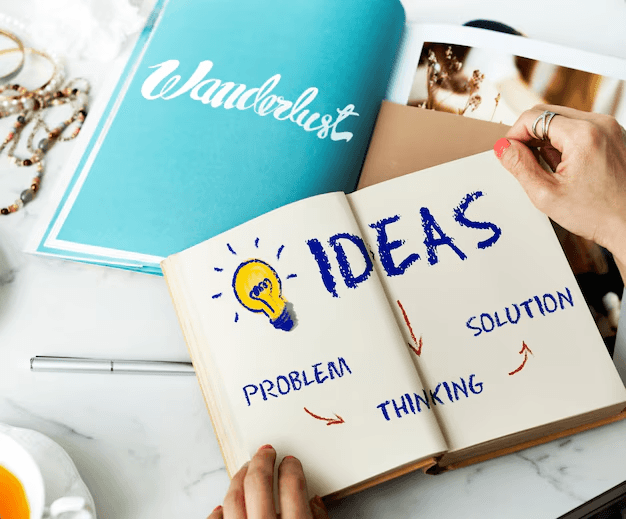
Seeing a template can make the abstract concrete. Here is a simplified personal growth plan template you can adapt.
Personal Growth Plan: [Your Name] – [Quarter/Year]
| Domain (e.g., Career, Health) | Vision Statement (Where do I want to be?) | SMART Goal (3-6 Months) | Key Actions / Habits (Weekly/Daily) | Resources Needed | Review Date | Progress Notes |
|---|---|---|---|---|---|---|
| Example: Professional | I am a confident, clear communicator who influences decisions through compelling presentations. | Deliver a 20-minute project proposal to senior leadership by Q3, receiving positive feedback on clarity and structure from at least 3 of 5 stakeholders. | 1. Enroll in “Presentation Skills” course (by May 1). 2. Practice a talk for 30min, 3x/week, recording & reviewing 1. 3. Join Toastmasters (by June 1). | Course fee, webcam, Toastmasters membership | July 15 | Delivered on 7/10. Felt prepared but need to slow down. Feedback: good data, visual overload. |
| Your Domain: |
This table format is excellent for SEO and readability, clearly organizing complex information.
Digital Tools to Consider:
- Notion/Trello: For a highly customizable, all-in-one dashboard.
- Google Sheets: Simple, shareable, and great for the table format above.
- Bullet Journal (BuJo): For the analog enthusiast who loves pen and paper.
- Goal-Tracking Apps: Like Strides or Goal Buddy for habit reinforcement.
Many resources, like the free downloadable tool mentioned in one competitive blog, can provide a pre-formatted document to jumpstart your process.
Navigating Tricky Terrain: Common Pitfalls and How to Avoid Them
Even with the best blueprint, obstacles arise. Here’s how to steer clear of the most common crashes.
- Pitfall: Vague Goals. “Get better at my job” is not a goal. It’s a wish. Fix: Use the SMART framework ruthlessly.
- Pitfall: No Accountability. You’re only human. Fix: Tell someone your goal. Hire a coach. Join a group. Public commitment works.
- Pitfall: Over-Commitment. Trying to overhaul your entire life in a month leads to burnout. Fix: Start with 1-2 core goals. Build momentum. Depth over breadth.
- Pitfall: Forgetting the ‘Why’. The grind becomes tedious. Fix: Re-read your vision statement weekly. Create a vision board. Connect daily actions to the larger purpose.
- Pitfall: All Planning, No Doing. Analysis paralysis. Fix: Set a rule: for every hour spent planning, spend two hours doing. The plan is a guide, not a cage.
- Pitfall: Business-Only Focus. As one Reddit user confessed, they were lost writing a “business-specific personal growth plan.” Your plan must integrate all of you. If you’re burned out, your professional growth will stall. Include health, relationships, and joy.
Integrating Your Personal and Professional Growth
The false divide between “personal” and “professional” growth is crumbling. The most successful people understand that a fulfilled, healthy, resilient person performs better in all domains. Your personal growth plan should reflect this integration.
- Communication Skills: Improved at home helps at work.
- Emotional Intelligence: Managing stress in personal life enhances decision-making at work.
- Health & Energy: Consistent sleep and exercise directly impact cognitive function and productivity.
- Financial Literacy: Reduces anxiety, allowing greater focus and risk-taking in your career.
When setting professional goals, ask: “What personal development does this require?” When setting personal goals (e.g., run a marathon), ask: “How will this professional skill (discipline, goal-setting) transfer?”
FAQ: Your Questions on Creating a Personal Growth Plan Answered
How is a personal growth plan different from a performance review at work? A performance review is typically backward-looking, evaluative, and often tied to compensation. A personal growth plan is forward-looking, developmental, and owned entirely by you. It encompasses all life domains, not just job metrics.
What if my goals conflict? (e.g., starting a business vs. spending time with family) This is where prioritization and creativity are key. Use your values to triage. Perhaps the goal is “Launch business X by Y date,” with a boundary “Work on business only during these dedicated hours, protecting family time fully.” The plan helps you negotiate these tensions consciously.
How often should I review my personal growth plan? At a minimum, conduct a formal monthly review. A quick weekly check-in is ideal for tweaking habits. A quarterly deep dive is necessary to assess goal relevance and set the next cycle’s direction. Make review a non-negotiable calendar event.
Can a personal growth plan help with anxiety or lack of direction? Absolutely. Anxiety often stems from uncertainty and a perceived lack of control. A growth plan replaces vague dread with specific, manageable actions. It provides a sense of agency and progress, which are potent antidotes to anxiety. The structure itself is calming.
Do I need to share my plan with anyone? It’s not required, but sharing with a trusted mentor, partner, or friend dramatically increases follow-through. It creates accountability and invites support. You can share the entire document or just your key goals.
Conclusion: Your Journey Begins with a Single, Written Step
Creating a personal growth plan is the single most empowering act of self-leadership you can undertake. It moves you from being a passenger in your own life to the conscious architect of your future. It transforms the chaos of daily demands into a coherent narrative of progress.
Remember, the plan itself is a tool, not the destination. Its power lies in the reflection it forces, the clarity it provides, and the consistent action it inspires. Perfection is not the goal; progress is. Your plan will evolve. You will achieve some goals, abandon others as your interests shift, and discover entirely new aspirations along the way. That’s the beauty of it.
You now have the blueprint—the mindset, the 6-step process, the template, and the awareness of pitfalls. The only thing missing is your commitment to begin.
Your Call to Action:
- Start Today: Block 60 minutes in your calendar this week for your self-assessment (Step 1). Use a journal or a notes app.
- Download a Template: For a more structured start, utilize a reputable personal development plan template from a credible source like High Speed Training.
- Share Your First Step: Accountability works! Tell one person you are creating your growth plan this month. Post a commitment on social media. Tag us @LifeTheLove.Blog—we’d love to cheer you on.
- Explore More: Our personal development section is packed with resources on habits, mindset, and productivity to fuel your journey. Dive in.
Your future, intentional self is waiting. The map is in your hands. Start drawing.
Internal Links Used:
- Focus Keyword: how to create a personal growth plan
- Category Page: Personal Development Articles
- Social/Community: Pinterest, Facebook, Instagram, Threads, Twitter/X, Medium
External Links Used:
- personal development plan (SNHU – Related Keyword)
- personal development plan template (Authoritative External)
- personal growth curriculum (Authoritative External)
